
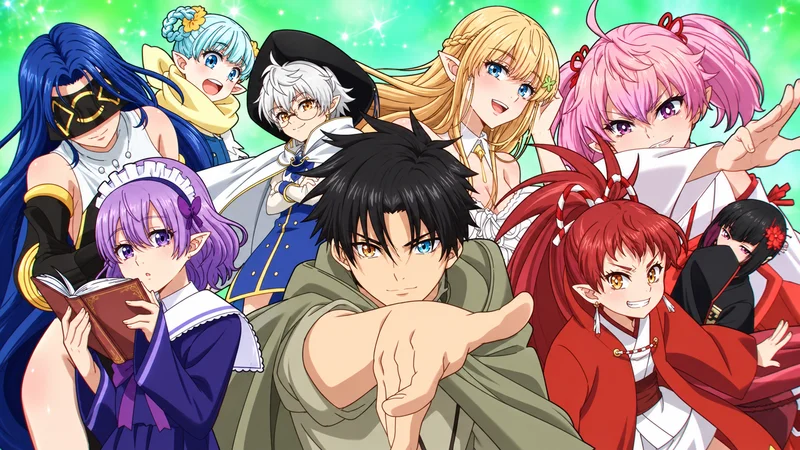
What is a harem in manga and anime? It is a story setup in which one central character attracts the romantic attention of several others. The familiar version follows a male lead surrounded by multiple potential girlfriends, but the wider category includes other arrangements. At MangaNato, understanding this label can help readers tell a romance built around competing love interests from one with a single central couple.
The term has a historical meaning unrelated to Japanese comics: it has been used for secluded domestic quarters in certain households. In modern manga and anime discussions, however, harem refers to a fictional relationship pattern, not necessarily a household, a marriage, or a group relationship. It also does not automatically mean a story contains explicit sexual content.
When readers ask, “What is a harem?”, the more revealing questions are how the characters feel about the protagonist, how much attention the competing relationships receive, and whether the story is about choosing between them. Those details explain the difference between a harem, a love triangle, and a reverse harem without revealing how any particular series ends.
The Relationship Setup That Defines a Harem Story
Many stories include several characters of the same gender, yet that alone does not make them harem stories. The defining feature is romantic possibility: more than one person has, or develops, feelings for the same lead, and the resulting relationships become an important part of the narrative. The lead might return some of those feelings, remain undecided, or fail to recognize what is happening.
A reader searching for “what is a harem” is therefore asking about the connections among characters rather than the size of the cast. Some stories make the competition obvious from the beginning. Others introduce potential partners gradually through school life, shared adventures, or unusual circumstances.
Comedies often build misunderstandings around these feelings, while dramatic versions may examine jealousy, loyalty, rejection, and the difficulty of making a choice. There is no universal rule requiring a particular number of admirers, although the label commonly suggests several rather than just two.
Reverse Harem and Other Variations
In a conventional harem romance, the main character is usually a boy or man with several female love interests. A reverse harem commonly places a girl or woman at the center of attention from several male characters. The name describes the reversed character arrangement, not a separate publishing format.
For example, Kiss Him, Not Me follows Kae Serinuma, a student whose sudden popularity brings several boys seeking dates with her. Its humor also comes from Kae’s own interests and the gap between what her admirers expect and what she wants. It is a more informative example of a reverse harem than simply pointing to a story with a predominantly male cast.
Not every series follows a strictly heterosexual pattern. Stories may feature same-gender suitors or more varied attractions. The useful test is still whether multiple possible romances involving one central character meaningfully shape the story.
What Is a Harem Compared with a Love Triangle?
A love triangle usually involves three people and a conflict over romantic feelings between them. A harem story places greater emphasis on a central character’s relationships with a broader group of potential partners. The two structures can overlap, and a series may start with a triangle before additional love interests become important.
Consider the difference between a romance about two people competing for the same person’s affection and a comedy that repeatedly shifts attention among several possible couples involving one protagonist. The second setup gives the audience more competing relationships to follow, even if the story eventually settles on just one.
Neither label tells you the ending. A harem protagonist is not automatically dating everyone, and a series can keep romantic feelings unresolved for much of its run. The distinction concerns the relationships that drive the story, not a promise about the final couple.
Why Romantic Rivalry Works in Different Genres

Harem is often treated as a romance subgenre, but the same relationship setup can appear alongside comedy, fantasy, school stories, science fiction, or adventure. It describes a recurring character dynamic rather than a fixed visual style or intended age group.
This matters when answering “what is a harem?” because labels such as shonen and shojo mean something different. They traditionally identify the readership of manga publications, not whether several characters will fall for the protagonist. A series published for young male readers can be an action adventure or a romantic comedy.
Nisekoi: False Love and Demon Slayer, for example, both appeared in Weekly Shonen Jump, despite their very different premises. The former turns a pretend relationship and conflicting feelings into comedy; the latter focuses on Tanjiro’s struggle against demons. Looking at when the Demon Slayer manga first came out provides a concrete example of that magazine’s publishing history. Its readership category does not make it a harem romance.
What Is a Harem in an Isekai or Fantasy Story?
In an isekai story, the protagonist enters or is reborn in another world. That premise has nothing inherently romantic about it, but some fantasy series combine a journey through an unfamiliar world with a growing circle of admirers. Characters may become close through shared quests, magical encounters, or the lead’s unusual abilities.
In these stories, romantic competition does not always dominate every chapter. Battles, exploration, or political conflict may occupy more space. Calling a work a harem becomes most useful when the attention of multiple potential partners remains a recognizable and recurring part of the narrative.
The same caution applies to adventure series with large mixed-gender teams. Friendship, trust, and loyalty are not proof of romantic attraction. A genre tag should reflect relationships actually presented in the story, not assumptions made from a group illustration.
Three Manga That Illustrate the Difference
The Quintessential Quintuplets
Negi Haruba’s The Quintessential Quintuplets begins with Futaro Uesugi taking a job tutoring five sisters who struggle with their studies. Schoolwork brings the characters together, while their developing relationships create romantic tension. Its central mystery is tied to which relationship ultimately matters most, making it an accessible example of the harem setup without needing to reveal the resolution.
Nisekoi: False Love
Naoshi Komi’s Nisekoi begins when Raku Ichijo and Chitoge Kirisaki must pretend to be a couple to maintain peace between their families. Raku also has feelings connected to his past, and additional romantic complications develop. The story shows how a harem comedy can use secrets, misunderstandings, and competing affections rather than simply placing several characters together.
Kiss Him, Not Me
Junko’s Kiss Him, Not Me offers a different perspective through Kae, a girl whose admirers are not necessarily aligned with her own romantic imagination. It uses the reverse-harem arrangement for humor while giving its central character particular preferences and interests. Comparing the three stories is a practical way to see what changes when the protagonist and romantic dynamics differ.
How to Recognize the Genre Before You Start Reading
When asking “what is a harem?” while browsing a new title, look beyond the cover art or a list of characters. A synopsis that stresses several people pursuing the same lead, repeated romantic misunderstandings, or the uncertainty of a final choice gives stronger evidence than an image of one character surrounded by others.
Genre labels can also overlap. A series may be tagged romance, comedy, school life, and harem at the same time because those descriptions identify different aspects of the work. Conversely, some stories have a few romantic subplots without making them central enough to justify the harem label.
Readers who prefer clear romantic progress may want to check whether a title emphasizes character development or prolonged uncertainty. Those who enjoy contrasting personalities and competing possibilities may find the format appealing. Neither approach is inherently better; it depends on the kind of romance you want to follow.
Frequently Asked Questions
What is a harem ending?
A harem ending generally means the protagonist ends up in an ongoing romantic relationship with multiple love interests rather than choosing only one. Not every harem story uses this ending: many choose a single partner, remain ambiguous, or take another direction.
Is a harem the same as polyamory?
No. Polyamory refers to consensual relationships involving multiple partners in real life or fiction. A harem story may feature characters who are not dating the protagonist at all, so several admirers do not automatically form a shared relationship.
Does harem anime always contain explicit scenes?
No. Some works include suggestive humor or fan service, while others focus on ordinary romantic comedy or emotional drama. The harem label describes a relationship setup, not a content rating.
Does the main character have to choose someone?
No. Some stories build toward a clear romantic choice, while others leave the outcome open or take an unconventional path. The presence of multiple love interests says little on its own about the conclusion.
Final Thoughts
The simplest answer to “what is a harem?” is that it describes a story centered on one character and several possible romantic partners. The genre’s appeal often lies in how those relationships develop, conflict, or remain uncertain, rather than in any particular ending.
Recognizing that basic structure helps distinguish harem romances from love triangles, reverse-harem stories, and adventures that happen to have large casts. It also makes it easier to choose manga according to the kind of relationships and storytelling you enjoy.

Adam Kan is a content editor at MangaNato with a passion for manga, manhwa, and manhua. He focuses on exploring popular series, highlighting fresh releases, and creating engaging content that helps readers discover compelling stories across different genres.