
To learn How to draw Demon Slayer characters, use a repeatable blueprint and workflow: start with gesture and simple shapes, map the face, draw hair and outfits as big clear forms, then clean lineart for a readable silhouette.
Use a simple, consistent pencil or basic digital setup, and study references to learn shapes and cues (not tracing) so you build control and accuracy faster.
Focus on the face first with clean eyes, brows, and big hair shapes.
Keep outfits and patterns simple and readable.
Build action from gesture, add effects last, then finish with clean lineart and light shading.
Read the full guide below on MangaNato to learn How to draw Demon Slayer characters with simple steps you can follow right away.
How to draw Demon Slayer characters?
If you want How to draw Demon Slayer characters without getting overwhelmed, focus on a consistent blueprint rather than copying one drawing at a time.
Demon Slayer’s style is easier when you learn the “building blocks” first: proportions, face layout, hair as big shapes, and signature outfit cues.
The goal is not perfect accuracy on your first attempt. The goal is a workflow you can repeat, so each drawing improves naturally.
Start with a simple style blueprint
Before you draw a specific character, set up the same base every time. This keeps your drawings consistent and makes character differences easier to add later.
Use this quick blueprint:
- Head shape: soft jaw, slightly pointed chin for younger characters
- Body: slim athletic build, shoulders not too wide
- Hands: simplified, clear finger grouping
- Clothing: crisp folds with fewer lines than you think
- Silhouette: hair and haori should read from far away
A useful beginner trick is to squint at your sketch. If you can still tell who it is from the silhouette, you are already close.
A repeatable 6-step workflow
This is the easiest workflow most beginners use when learning How to draw Demon Slayer characters:
- Gesture: a loose stick figure that shows action and balance
- Shapes: cylinders for arms and legs, a box for torso, sphere for head
- Proportions: place shoulders, hips, knees, and hands
- Face map: eyes line, nose mark, mouth line
- Hair and outfit: big shapes first, then small details
- Clean lineart: remove messy lines, keep edges confident
If you do this in the same order every time, you will improve faster than jumping straight into details.
Proportions that look “anime correct” fast
A simple proportion guide that works well:
- Teen characters: about 6.5 to 7 heads tall
- Younger look: slightly larger head and shorter legs
- Hero stance: shoulders aligned over hips, feet planted
- Action pose: center of gravity over the supporting foot
Do not fight anatomy early. Demon Slayer style often simplifies forms, so clarity beats realism.
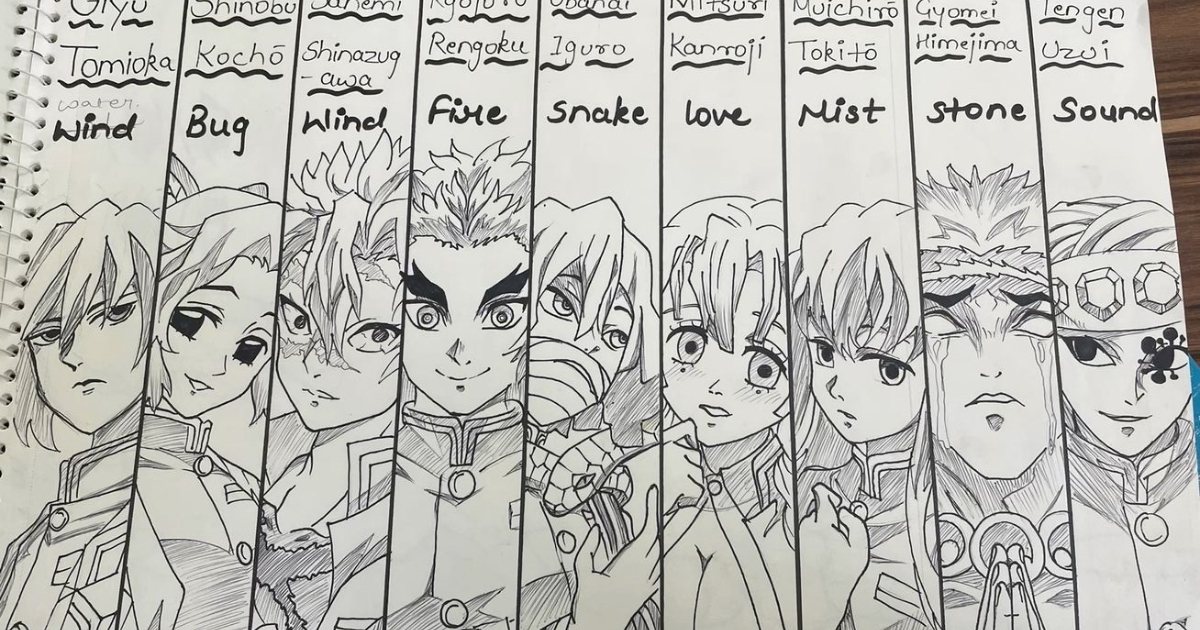
Tools and references you actually need
When learning How to draw Demon Slayer characters, tools matter less than control. One pencil you can manage is better than five fancy brushes you cannot. Keep your setup basic and consistent so your practice is stable.
Also, use references in a clean way: study them, do not trace and claim it as original.
Traditional tools that work anywhere
You can draw solid Demon Slayer fan art with a simple kit:
- Mechanical pencil or HB pencil
- Kneaded eraser for lightening sketch lines
- Fineliner or brush pen for inking
- Smooth paper (A4 or US Letter are both fine)
- Optional: gray markers for quick shading
If you are in a humid climate, thicker paper helps prevent warping when you use markers.
Digital tools for a clean anime look
A beginner-friendly digital setup:
- Tablet (any pressure-sensitive model is enough)
- 2 to 3 brushes only: sketch, ink, flat color
- Stabilizer on low to medium to keep lines smooth
- Separate layers: sketch, lineart, flats, shadows, effects
For Demon Slayer style, choose brushes with clean edges. Textured brushes can be used later, but clean lines are the fastest path to “anime accuracy.”
Reference practice that improves skill
Use references as study material:
- Break the character into shapes you can copy freehand
- Write 2 to 3 notes about what makes them recognizable
- Do a quick “memory redraw” after studying for 2 minutes
- Compare and fix only one thing at a time
This approach trains your eye, not just your hand.
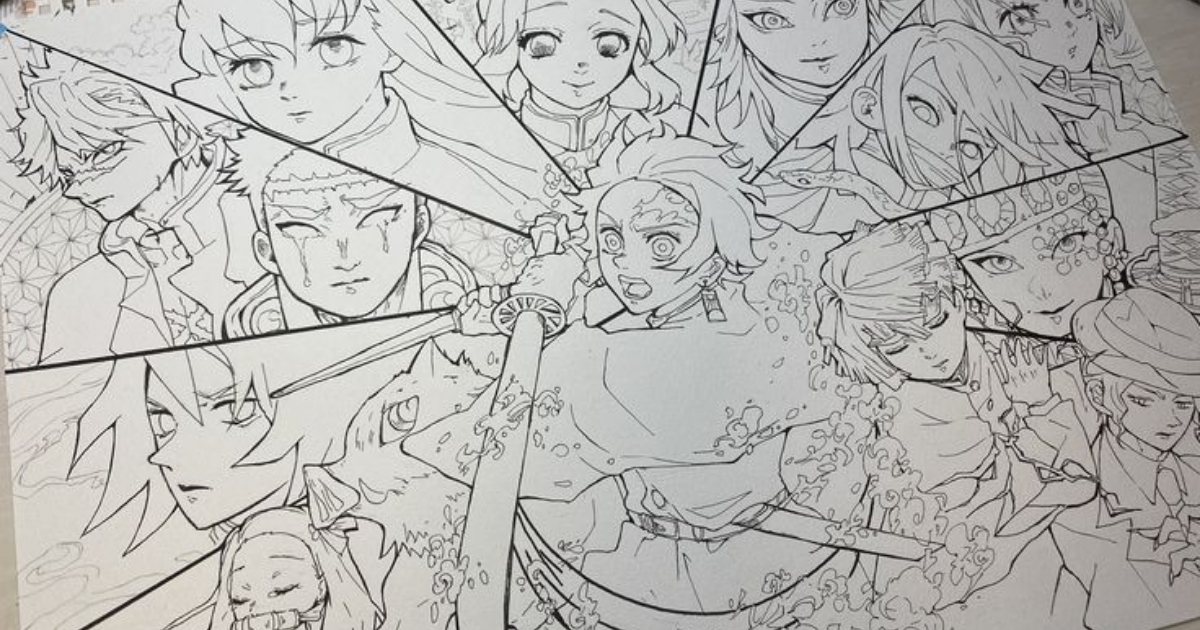
Drawing faces and expressions the Demon Slayer way
If you want your art to read as Demon Slayer quickly, prioritize the face. In How to draw Demon Slayer characters, the face is where most recognizability lives: eyes, brows, and hair framing.
Start simple, then increase detail only when the base face feels right.
Eyes and eyebrows that match the style
Demon Slayer eyes are expressive and clean. A practical approach:
- Draw the top eyelid first as the main “emotion line”
- Keep the bottom lid lighter and simpler
- Add iris and pupil with clear contrast
- Place highlights consistently to show light direction
Eyebrows do most of the acting. If the expression feels wrong, fix the eyebrow angle before changing anything else.
Nose and mouth: less line, more intention
Many beginners overdraw noses and mouths. Try this:
- Nose: small mark or short line, not a full nose shape
- Mouth: thin line with a slight curve, plus a small shadow line only if needed
- Emotion: open mouth shapes should be clean and not over-detailed
If the character looks older than intended, reduce nose detail and soften the mouth corners.
Hair as big shapes first
Hair is a major identity marker in Demon Slayer. Draw it like a helmet of shapes:
- Start with the overall silhouette of the hair
- Add 3 to 6 big clumps, not dozens of strands
- Only then add a few thin strands for texture
A strong hair silhouette will save your drawing even if small details are imperfect.
Uniforms, haori patterns, and signature details
After the face, outfits are the next fastest way to make your drawing read as Demon Slayer. In How to draw Demon Slayer characters, clothing details should be clean and intentional, not noisy.
Most of the style comes from clear lines and controlled pattern repetition.
Demon Slayer Corps uniform basics
The uniform is structured, so build it with simple shapes:
- Collar: crisp and symmetrical
- Buttons: evenly spaced, do not over-render
- Belt and folds: a few major folds are enough
- Sleeves: keep lines smooth and avoid scratchy shading
A good rule: if folds confuse the design, remove half of them.
Haori patterns without messy repetition
Patterns look hard until you treat them like a grid:
- Lightly map the pattern area first
- Repeat the shape at consistent spacing
- Keep edge lines clean and avoid uneven thickness
- Simplify the pattern when the pose is complex
If you are shading, do the pattern first, then shadows on top. That keeps the design readable.
Nichirin swords and accessories
Accessories should support the character, not steal attention:
- Sword: one clean edge line, one spine line, minimal detail
- Guard: simple geometry first, then small decoration
- Earrings, beads, masks: draw as clear shapes, not texture blobs
If your drawing feels crowded, reduce accessory line weight and keep the face lines strongest.
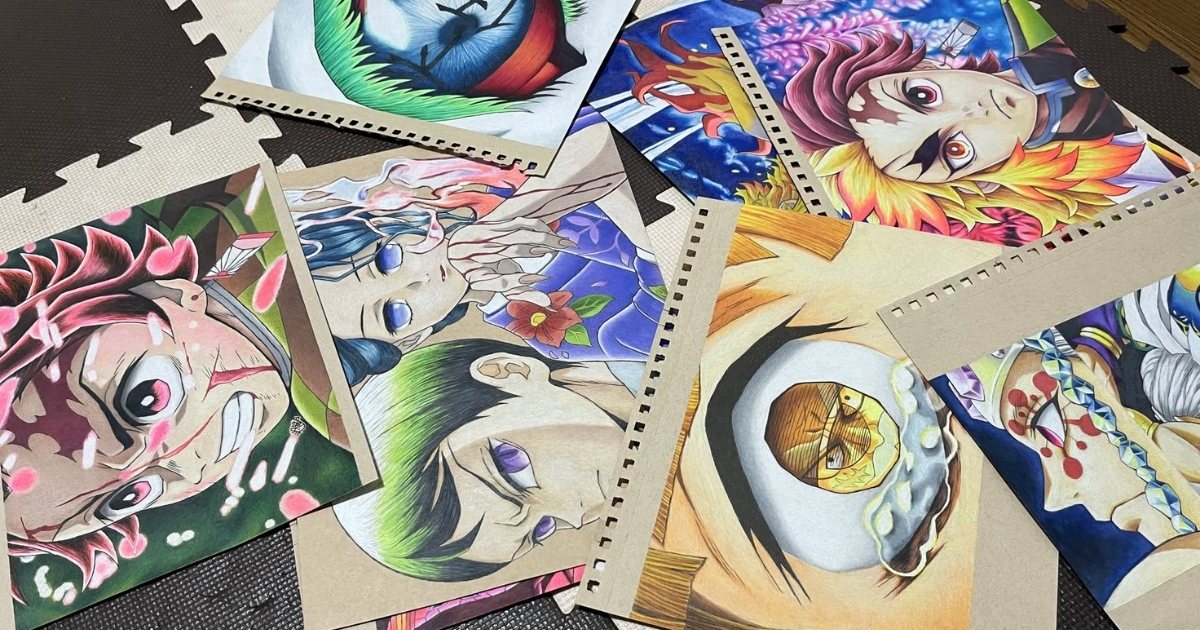
Pose, action, and breathing-style effects
Many people start learning How to draw Demon Slayer characters because they want dynamic sword poses. The key is to build action from gesture first, then add the effects as an overlay.
Do not draw effects until the pose works by itself.
Gesture and balance for anime action
A good action pose has:
- A clear line of action through the spine
- One leg supporting weight, the other adding motion
- Shoulders and hips tilted for energy
- Hands placed with purpose, not floating
If the pose looks stiff, exaggerate the tilt of the shoulders and hips slightly.
Sword arcs and motion lines that look clean
For motion lines:
- Use longer strokes, fewer lines
- Curve lines to follow the weapon path
- Keep line thickness consistent
- Leave white space so the character stays readable
A common mistake is filling the page with speed lines. Use them to support the action, not replace it.
Elemental effects without overcomplicating
Breathing effects should look like stylized shapes, not realistic physics:
- Use 2 to 3 big flow shapes first
- Add small accents only near the sword
Keep effects behind the face so the expression stays clearIf the effect hides the silhouette, reduce it until the character reads clearly again.
Mini-tutorials for popular Demon Slayer characters
If you are practicing How to draw Demon Slayer characters, repeating a few popular characters is a great training plan. The goal is to learn the “recognition cues” for each one.
Use these mini-tutorials as a checklist, then redraw from memory.
Tanjiro: the quickest recognition cues
General profile cues:
- Kind eyes and straightforward expression
- Distinct hair shape and forehead mark
- Checkered haori pattern
Quick steps:
- Draw a friendly face with slightly rounded eyes
- Block in hair as large spikes and clumps
- Place the forehead mark early so proportions align
- Draw the haori as two big panels
Add the check pattern lightly, then darken evenlyWhat to prioritize:
- The haori pattern spacing
- Hair silhouette
- A calm, determined expression
Nezuko: soft face, strong silhouette
General profile cues:
- Younger facial proportions
- Long hair shape with clear flow
- Bamboo muzzle as a clean rectangle form
Quick steps:
- Use a slightly larger head-to-body ratio
- Keep eyes large and soft, brows gentle
- Draw long hair in 4 to 6 large flowing shapes
- Add the muzzle as a simple band and cylinder form
- Keep lineart light and clean for a softer look
What to prioritize:
- Hair flow and overall shape
- Muzzle placement symmetry
- Gentle expression even in action poses
Zenitsu: hair shape sells the character
General profile cues:
- Signature haircut silhouette
- Nervous or intense expression
- Triangular haori pattern
Quick steps:
- Draw a thinner jaw and sharper eye angle for intensity
- Block the hair as a single bold shape, then cut into clumps
- Place the haori with big folds, minimal interior lines
- Map the triangle pattern area first
- Add emotion through eyebrows and mouth before shading
What to prioritize:
- Hair silhouette accuracy
- Pattern repetition consistency
- Expression clarity
Inosuke: mask and posture first
General profile cues:
- Boar mask shape
- Aggressive posture
- Muscular but stylized torso
Quick steps:
- Gesture pose with a wide stance and forward lean
- Draw the boar mask as one solid shape before details
- Place shoulders wide and arms ready for action
- Add fur elements as grouped shapes, not scribbles
- Keep blades clean and symmetrical
What to prioritize:
- Mask proportions
- Strong, grounded stance
- Clear silhouette from a distance
Clean finishing: lineart, color, and shading
Finishing is where most beginner drawings either level up or fall apart. In How to draw Demon Slayer characters, the clean anime look depends on controlled line weight and simple shadows.
If you want your art to look more “official-style,” keep it cleaner than you think you need to.
Inking for crisp anime lines
Use this lineart approach:
- Thick lines on the outer silhouette
- Medium lines for hair clumps and clothing edges
- Thin lines for face features and small details
- Avoid scratchy repeated strokes, commit to fewer lines
If you are nervous, practice long lines on a separate page for 2 minutes before inking.
Flat colors that stay readable
A clean coloring workflow:
- Flats first on separate shapes
- Fix edges so colors do not spill
- Add one shadow layer
- Add minimal highlights, especially on hair and eyesKeep your palette simple. Too many tones can make the outfit patterns hard to read.
Shading that fits the Demon Slayer look
Most anime shading is about shape, not texture:
- Use a single main shadow shape per area
- Place shadows under hair, under chin, under sleeves
- Keep edges crisp unless the scene is meant to be soft
- Add small highlights on eyes and hair for impact
If your shading makes the character look dirty, reduce the number of shadow shapes.
FAQs about How to draw Demon Slayer characters
If you still have questions about How to draw Demon Slayer characters, these FAQs match common People Also Ask searches with concise, practical answers.
What is the easiest Demon Slayer character to draw first?
Many beginners start with Tanjiro because his design has clear cues: simple face, recognizable hair, and an easy-to-grid checkered haori.
Do I need to learn anatomy before drawing Demon Slayer characters?
You do not need full anatomy first, but you should learn basic proportions, simple cylinders for limbs, and balance in poses to avoid stiff drawings.
How do I draw Demon Slayer eyes correctly?
Draw the top eyelid as the main expression line, keep the lower lid lighter, and place iris highlights consistently. Fix eyebrows first if the emotion looks wrong.
How do I draw haori patterns without messing them up?
Lightly map the pattern area, repeat shapes on a grid, and keep spacing consistent. Simplify the pattern if the pose is complex so readability stays high.
How can I draw breathing effects without overdoing it?
Start with 2 to 3 large flow shapes that follow the sword path, then add small accents near the blade. Keep effects behind the face so the character stays readable.
How long does it take to get good at How to draw Demon Slayer characters?
With 20 to 30 minutes of focused practice a day, many artists see visible improvement in 2 to 4 weeks, especially if they repeat the same character and correct one issue at a time.
Learning How to draw Demon Slayer characters gets much easier when you follow a repeatable workflow: build gesture and proportions, map the face, draw hair as big shapes, keep outfits clean, and add patterns and effects last.
If you practice a small set of characters repeatedly, your accuracy and confidence will grow faster than trying to draw everyone once.
If you are also wondering when does Demon Slayer come back, explore more drawing guides, character breakdowns, and anime art tips on MangaNato.
