
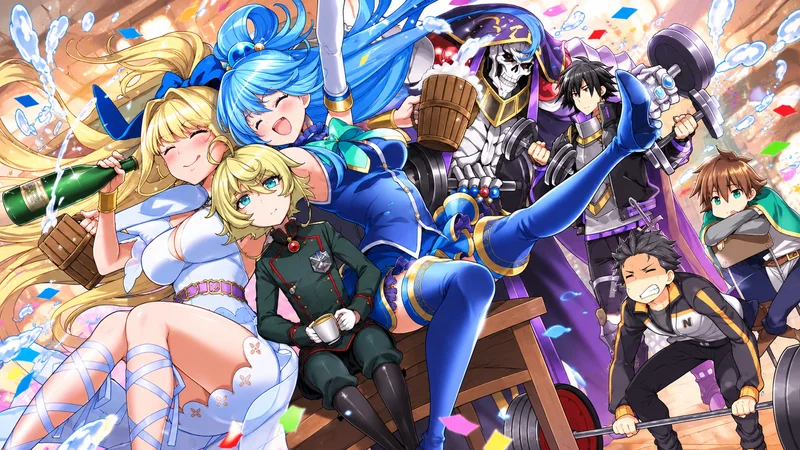
What is isekai? Isekai is a type of Japanese fantasy or science-fiction storytelling in which a character travels, is summoned, or is reborn into another world. The Japanese word isekai (異世界) means “different world” or “another world.” In manga and anime, the unfamiliar setting becomes central to the character’s journey, whether it brings extraordinary abilities, difficult choices, or an entirely new way of life. Readers exploring fantasy stories on MangaNato may encounter the term alongside adventure, comedy, or romance.
An isekai protagonist does not have to die, become impossibly powerful, or enter a world that resembles a video game. Some characters are unexpectedly transported from modern Japan; others are reincarnated with memories of a previous life. There are also reverse-isekai stories in which a visitor from a fantasy realm arrives in an ordinary modern setting.
The key is the movement between distinct worlds, not a particular kind of magic. Looking at how characters cross that boundary, what they must learn afterward, and why some fantasy stories do not qualify makes the genre easier to recognize. A few contrasting manga examples show how much variety can fit under the same label.
The Meaning of “Another World” in Japanese Fiction
The straightforward question “what is isekai?” begins with the word itself. Isekai combines Japanese elements meaning “different” and “world.” As a storytelling label, it is widely used for narratives in which someone enters a reality separate from the one they previously knew. That separation can be physical, supernatural, or otherwise built into the premise.
Often, readers experience the new world through the protagonist’s confusion. Ordinary assumptions no longer work: local customs may be unfamiliar, political systems may operate differently, and creatures or abilities thought impossible might be commonplace. Even when the setting is welcoming, the character has to make sense of it from an outsider’s position.
Stories about crossing into unfamiliar places existed long before the modern genre label became popular. What distinguishes today’s isekai manga is not the invention of another world, but the many ways creators use that transition to explore identity, opportunity, loss, and adaptation.
Three Common Ways Characters Cross Worlds
There is no single entrance to an isekai setting. The method of arrival often determines how much the protagonist remembers, what they stand to lose, and whether returning home is possible. Three broad patterns appear frequently, although individual stories can combine them.
Transported or Summoned into an Unfamiliar Place
A character may be pulled into another realm by a magical event, a summoning ritual, or a mysterious portal. They usually retain their original identity and memories, which makes the contrast between everyday life and the new environment immediate. In Re:ZERO -Starting Life in Another World-, Subaru Natsuki finds himself summoned to an unfamiliar world rather than starting a new life as a different person.
What Is Isekai Reincarnation?
Reincarnation is a related but distinct pattern. After dying in one world, the protagonist begins another existence elsewhere, sometimes in a different body or even as a different species. The question “what is isekai?” becomes especially relevant here because being reborn is not sufficient on its own: the new existence must involve another world, not merely another lifetime in the same setting.
That Time I Got Reincarnated as a Slime makes this distinction clear. Its protagonist dies in contemporary Japan and awakens as a slime in a world of magic and monsters. Memories from his former life shape how he approaches unfamiliar opportunities, but his new circumstances force him to develop an entirely different identity.
Reverse Isekai: The Visitor Comes to Our World
Reverse isekai turns the direction of travel around. Instead of an ordinary person entering a fantasy kingdom, someone from a supernatural or distant realm ends up in a modern human society. The humor and drama may come from a powerful outsider struggling with rent, employment, or social conventions rather than monster battles.
The Devil Is a Part-Timer! provides a recognizable example: a defeated demon lord and his companion arrive in present-day Tokyo, where surviving financially proves more urgent than ruling a kingdom.
What Is Isekai Compared with Ordinary Fantasy?
Fantasy can take place in an imaginary kingdom without being isekai. If characters have always lived in that world and the plot never depends on crossing from a separate reality, it is generally better described simply as fantasy. Magic, dragons, monsters, or medieval-style buildings do not independently establish an isekai premise.
Similarly, a character growing stronger through training is not proof that a series belongs to the genre. Game-like levels, skill menus, and quests are common in some other-world stories, but those features also appear in fantasy adventures that have no world-crossing element.
Virtual-reality settings can be less straightforward. If characters are playing a game while remaining connected to their original reality, readers may disagree about whether the experience is genuinely another world. A story in which a game environment becomes a separate lived reality offers a stronger case, but the boundary is not always universally agreed upon.
Time travel is another useful distinction. Going into the past of the same world is not necessarily isekai, even if that historical period feels strange. A story may borrow elements of both time-travel fantasy and other-world adventure, so the actual rules of its setting matter more than a single label.
Why the World Change Matters More Than Special Powers
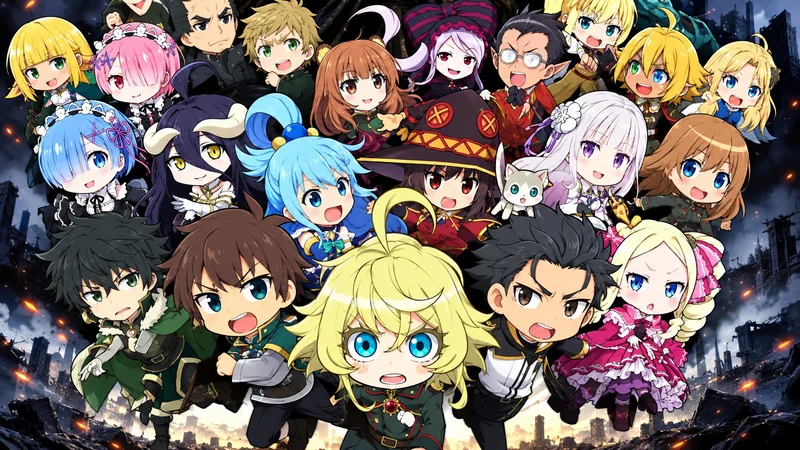
What is isekai without an exceptionally strong hero? It can still be a story about finding work, building friendships, navigating unfamiliar politics, or trying to return home. The genre’s central opportunity is the contrast between a person’s former experience and the demands of another reality.
Some stories use that contrast for wish fulfillment. A protagonist who felt powerless in ordinary life receives abilities, recognition, or a fresh start. Others challenge the fantasy of an easy second chance, showing that unfamiliar customs, dangerous decisions, and emotional attachments create new responsibilities rather than removing old problems.
That difference affects the reading experience. One series might focus on leveling up through battles, another on running a community, and another on the psychological consequences of repeated failure. The shared premise does not prescribe the same mood or outcome.
Four Manga That Approach Isekai Differently
“What is isekai in manga?” becomes easier to answer when the examples do not all follow the same formula. The following series illustrate different uses of world travel, from survival to comedy. Each has a manga edition, although several originated as prose fiction.
Re:ZERO -Starting Life in Another World-
Created by Tappei Nagatsuki, Re:ZERO follows Subaru after his unexpected arrival in another world. His unusual ability to return to an earlier point after dying does not remove the pain or uncertainty of his experiences. The story uses a fantasy setting to explore difficult choices and the cost of trying to protect other people.
That Time I Got Reincarnated as a Slime
Based on Fuse’s story, this manga turns the typical heroic arrival upside down by giving its protagonist a modest-looking monster form. His new abilities and relationships gradually become the basis for cooperation, community building, and wider conflicts. It is a useful choice for readers interested in how a fresh start can evolve into world-building.
Overlord
In Overlord, Momonga stays logged into his favorite online game as it shuts down and finds that the world around him has become real. Now inhabiting his powerful skeletal avatar, he faces questions about authority, loyalty, and the consequences of wielding overwhelming strength. The manga shows how an apparent game setting can become a lasting alternate reality.
The Devil Is a Part-Timer!
This manga reverses the usual fantasy journey. Its demon-lord protagonist must learn to function in Tokyo, where everyday expenses and workplace responsibilities are central problems. It demonstrates that an other-world premise can support workplace comedy and slice-of-life storytelling rather than a conventional heroic quest.
How Manga, Light Novels and Anime Tell the Same Story Differently
Readers asking “what is isekai in anime?” sometimes assume that the animated version is the original work. In fact, many familiar isekai properties began as web novels or light novels before receiving manga and anime adaptations. Other series may begin in a different medium. The premise can remain recognizable across versions while individual scenes, pacing, and details change.
For example, the manga adaptations of Re:ZERO and The Devil Is a Part-Timer! bring stories established in prose into sequential artwork. It is therefore important to check whether a recommendation, release date, or character detail refers to the novel, manga, or animation.
Not every fantasy franchise follows that path. Demon Slayer: Kimetsu no Yaiba, for instance, began as a manga before being adapted into anime. A look at when the Demon Slayer manga first came out illustrates how an original chapter debut differs from collected-volume and anime release dates. Those publishing distinctions matter when comparing adaptations, even though Demon Slayer itself is not an isekai story.
Choosing an Isekai Story That Suits You
If you are still asking “what is isekai?” after seeing the genre attached to several titles, start by asking what the protagonist actually does after arriving. A synopsis about surviving an unfamiliar kingdom promises a different experience from one about managing a peaceful new life or confronting the consequences of extraordinary power.
For a tense story with repeated setbacks, Re:ZERO may be a better starting point than a lighthearted comedy. Readers who enjoy cooperative world-building might lean toward That Time I Got Reincarnated as a Slime, while those interested in the outsider’s adjustment to modern life could try The Devil Is a Part-Timer!.
Also check the edition and the content guidance for the specific work. An isekai label does not determine whether a series contains violence, romance, mature themes, or comedy. Reading a publisher’s description and an available sample is more dependable than assuming that all stories about another world feel alike.
Frequently Asked Questions
Do all isekai protagonists die first?
No. Some are reincarnated after death, while others are summoned or transported without dying. Reverse-isekai stories can also bring inhabitants of a fantasy realm into the modern world.
Is Sword Art Online considered isekai?
Its classification is debated because being trapped in virtual reality is not necessarily the same as entering a separate world. Some readers group it with isekai because of its immersive game setting, while others treat it primarily as virtual-reality science fiction. The distinction depends on how strictly the term is used.
Does an isekai story need magic or game levels?
No. Fantasy magic and role-playing game mechanics are familiar conventions, but the essential feature is the shift between different worlds. A story can emphasize cultural adjustment, relationships, or ordinary work instead of spells and battles.
Final Thoughts
Ultimately, what is isekai? It is a storytelling premise built around crossing from one world into another and discovering how that change transforms a character’s life. Reincarnation, summoning, and reverse isekai are different ways to explore the same central contrast.
Rather than treating the term as a promise of powerful heroes or game mechanics, look at the kind of journey each series offers. The best starting point is the story whose unfamiliar world creates challenges and relationships you genuinely want to follow.

Adam Kan is a content editor at MangaNato with a passion for manga, manhwa, and manhua. He focuses on exploring popular series, highlighting fresh releases, and creating engaging content that helps readers discover compelling stories across different genres.