
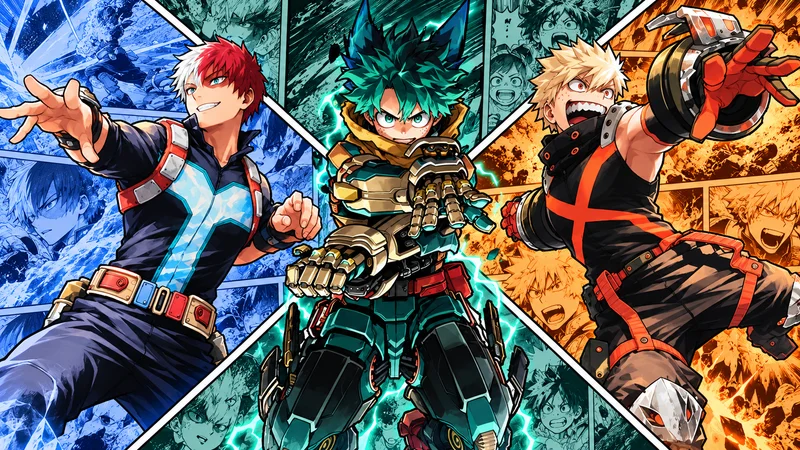
What is manga? Manga is a form of Japanese comics and graphic storytelling that uses illustrations, dialogue, and sequential panels to tell stories. It covers everything from action and fantasy to romance, mystery, comedy, and everyday life. If you have encountered the term while exploring MangaNato, the most useful thing to understand is that manga describes a storytelling medium rather than a single genre or drawing style.
The word manga (漫画) is used broadly for comics in Japanese, while international readers generally associate it with comics originating in Japan. Many manga are published in black and white, traditionally read from right to left, and released as individual chapters before being collected into books. These are common features, not rules that apply to every work.
Understanding manga becomes easier once you know how the format developed, how its pages are organized, and how different stories are categorized. The distinctions between manga, anime, manhwa, and manhua are also worth knowing, especially when choosing what to read for the first time.
How Manga Developed in Japan
Manga has a long cultural history, but modern Japanese comics did not emerge from a single artist or invention. To answer the question “what is manga?” historically, it helps to distinguish older illustrated traditions from the modern publishing medium. Japan had illustrated narratives, humorous drawings, and printed picture collections long before the comic books familiar to readers today. During the nineteenth and early twentieth centuries, Japanese cartoonists also encountered European and American approaches to illustration and sequential storytelling.
The artist Katsushika Hokusai published collections of sketches under the title Hokusai Manga beginning in 1814. Despite sharing the name, those collections were not manga in the modern sense. They belong to the wider history of Japanese illustrated art rather than representing a direct equivalent of contemporary comic storytelling.
Modern manga developed through changes in printing, newspaper cartoons, comic magazines, and popular entertainment. After World War II, artists such as Osamu Tezuka helped expand the possibilities of longer narratives, expressive characters, and cinematic panel arrangements. Manga subsequently developed into a major publishing medium with stories for different ages, interests, and audiences.
Its growth also changed how comics were perceived. Rather than being limited to short humorous strips or children’s entertainment, manga became a way to tell complex stories about relationships, personal ambition, history, social conflict, and imagined worlds.
Storytelling Beyond a Recognizable Drawing Style
What is manga art known for? Many readers picture expressive eyes, dramatic facial reactions, speed lines, and detailed character designs. These features appear in many popular series, but they are not requirements. Some artists favor realistic anatomy and carefully drawn environments, while others use simple figures, exaggerated comedy, or experimental page layouts.
One of manga’s distinguishing strengths is the way illustrations control the pace of a scene. A brief conversation might take several panels, allowing a pause, expression, or movement to carry emotional meaning. An action sequence may instead use angled compositions and rapid transitions to communicate speed and tension.
Black-and-white artwork remains common, partly because of established publishing practices and production demands. Artists frequently use linework, contrast, and screentones to suggest texture, lighting, and atmosphere. Color pages and fully colored manga also exist, so the absence of color is not what defines the medium.
The relationship between words and pictures matters more than any particular visual convention. Dialogue can explain what a character says, while the illustrations reveal hesitation, disagreement, or feelings that remain unspoken.
Reading a Manga Page from Right to Left
Once the basic question “what is manga?” is answered, page order is often the next thing a new reader needs to understand. Most Japanese manga follow a right-to-left reading direction. For someone familiar with English-language comic books, the page order may initially feel reversed. Many English translations preserve the original Japanese arrangement so that the artwork and panel composition remain as intended.
The usual reading sequence is straightforward:
- Begin on the right-hand side: Open the book from what may look like the back to readers accustomed to Western publishing.
- Follow panels from right to left: Start near the upper-right area of a page, move toward the left, and then continue downward through the layout.
- Read dialogue in the same general direction: Speech bubbles usually follow the panel sequence, although unusual compositions may require additional attention.
- Continue through the pages: In a typical Japanese-style printed manga, the right-hand page comes before the left-hand page.
Not every page is arranged in neat horizontal rows. Artists sometimes use overlapping panels, tall compositions, or illustrations that stretch across two pages. In those cases, visual placement and the flow of the scene help indicate where your eyes should move next.
Some translated or digitally reformatted comics use different layouts. When an edition provides its own reading instructions, those instructions should take priority over the general right-to-left convention.
From Magazine Chapters to Collected Volumes
What is manga serialization? It means publishing a story in installments rather than releasing it as one complete book. Many manga series begin this way. Depending on the publication, chapters may follow weekly, monthly, or other schedules. Readers follow these installments as the narrative develops, sometimes over several years.
Publishers may later collect previously released chapters into individual books, commonly called tankōbon volumes. This explains why a manga can have several important release dates: its first serialized chapter, its first collected volume, and the publication of a translated edition may all occur at different times.
Demon Slayer: Kimetsu no Yaiba provides a useful example. Created by Koyoharu Gotouge, the series began serialization in Weekly Shonen Jump in 2016 and was subsequently collected into 23 volumes. Readers interested in the distinction between its original debut and later book releases can explore when the Demon Slayer manga first came out for a closer look at its publication timeline.
Not all manga follow the same publishing model. Some are released as standalone stories known as one-shots, while others appear directly in collected books or through digital publishing services. A series may also move between publications or experience breaks in its release schedule.
Understanding the distinction between chapters and volumes helps readers avoid confusion when comparing editions. Chapter numbering describes individual installments, whereas volume numbering describes the books that collect them.
Shonen, Shojo, Seinen and Josei Explained
What is manga for adults compared with manga for younger readers? Japanese publishers commonly use categories describing the intended readership of a publication. These labels are frequently mistaken for genres, even though they do not determine what kind of story a manga must tell.
- Shonen: Traditionally aimed at younger male readers. It includes action adventures, sports stories, comedy, romance, and many other subjects.
- Shojo: Traditionally aimed at younger female readers. Its stories can explore relationships, fantasy, personal growth, mystery, or adventure.
- Seinen: Generally associated with publications targeting adult men. The category includes serious drama, comedy, science fiction, romance, and everyday-life stories.
- Josei: Generally associated with adult female readerships. Stories may focus on relationships, careers, family life, fantasy, or other subjects.
- Kodomo: A category associated with manga intended for younger children, often featuring accessible stories and age-appropriate themes.
These audience categories are not strict boundaries. A shonen series can attract adult readers, while a josei manga may appeal to people outside its original target audience. The publishing category is useful background information, but it cannot tell you everything about a story’s content or maturity level.
Genres describe something different: what happens in the story. Action, horror, romance, sports, historical fiction, and slice of life can appear across multiple readership categories. A manga’s genre is therefore often a more practical starting point when deciding whether its subject matter matches your interests.
Manga Compared with Anime, Manhwa and Manhua
What is manga compared with anime? Manga is a comics medium built around still illustrations arranged on pages or digital screens, while anime uses moving images, sound, and performance. The two are closely connected, but they are not interchangeable. An anime may adapt an existing manga, but anime can also originate from novels, games, or entirely original productions.
Even when an anime adapts a manga, the two versions may differ. Animated productions can change pacing, rearrange scenes, expand certain moments, or leave out material. Reading the original manga can therefore offer a different perspective on a familiar story rather than simply repeating the viewing experience.
Manhwa generally refers to Korean comics, while manhua refers to Chinese-language comics, particularly those associated with China and other Chinese-speaking communities. These traditions have their own publishing histories and artistic approaches, although they influence one another and share many storytelling techniques.
The term webtoon usually describes a digital comics format, commonly designed for vertical scrolling. Webtoons are strongly associated with South Korea, but creators in other countries also use the format. A vertically scrolling comic is not automatically Korean, just as every manga is not necessarily printed in a traditional book.
The most reliable way to distinguish these forms is to consider their publishing traditions, origins, and presentation rather than judging them by a character’s appearance alone.
Finding a Good Starting Point
Knowing the answer to “what is manga?” is useful, but choosing your first series depends on the kinds of stories you already enjoy. Readers who like high-stakes action and supernatural conflicts might appreciate Demon Slayer, while those interested in competitive sports and teamwork could consider Haikyu!!. For a quieter story centered on everyday observations and humor, Yotsuba&! offers a different kind of reading experience.
There is no requirement to begin with a famous or particularly long series. A shorter completed manga can be a comfortable introduction because it provides a self-contained reading experience without requiring a major commitment. Ongoing series may be more appealing if you enjoy following new developments over time.
Before choosing a title, consider its premise, genre, intended audience, and publication status. Content ratings can also help identify material suited to different ages. Reading a short description or an available sample chapter is often more informative than relying on popularity alone.
Most importantly, a manga does not need to resemble the action-oriented stories that dominate some anime discussions. There are comics about music, cooking, historical events, family relationships, professional careers, and ordinary experiences. Exploring those differences is part of discovering what the medium has to offer.
Frequently Asked Questions
Is manga the same as a graphic novel?
The two terms overlap but emphasize different things. Manga generally identifies a comics tradition associated with Japan, while graphic novel describes a book-length comics work or a publishing format. A collected manga volume can be sold alongside graphic novels, but not every graphic novel is manga.
Do you need to watch anime before reading manga?
No. Manga can be enjoyed independently, including when an anime adaptation exists. Starting with the manga allows readers to experience the illustrations, dialogue, and pacing of the original comic. Watching an adaptation first is simply another option, not a requirement.
Can a manga story be completed in a single chapter?
Yes. A one-shot manga tells a story in a single standalone installment, although its length can vary. Some one-shots remain independent works, while others develop into longer series. They can be a useful introduction for readers who want a complete story without starting a multi-volume collection.
Final Thoughts
Manga is much more than a recognizable illustration style. It is a diverse form of Japanese comics shaped by publishing traditions, visual storytelling, and the interests of many different readers. Its stories can be lighthearted or serious, brief or extensive, realistic or fantastical.
Once you understand the reading direction, the difference between chapters and volumes, and the distinction between audience categories and genres, manga becomes easier to explore. The best introduction is not necessarily the most popular title, but a story whose characters, ideas, and subject matter genuinely interest you.

Adam Kan is a content editor at MangaNato with a passion for manga, manhwa, and manhua. He focuses on exploring popular series, highlighting fresh releases, and creating engaging content that helps readers discover compelling stories across different genres.