
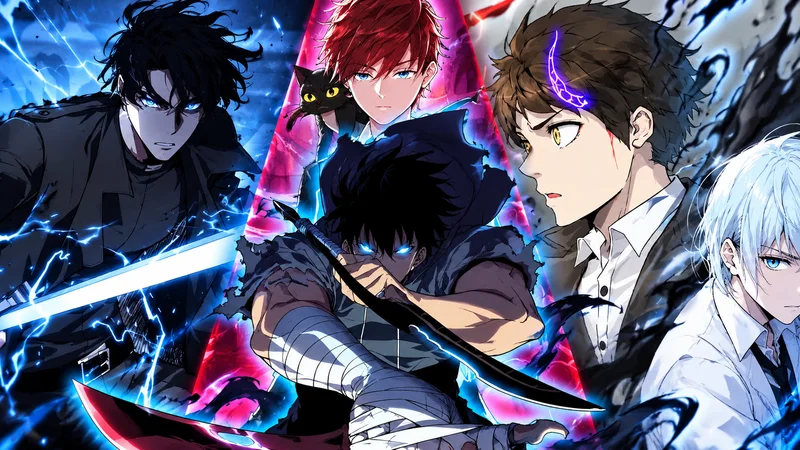
What is manhwa? Manhwa is the Korean term for comics and cartoon storytelling. Outside Korea, English-speaking readers generally use it for comics originating in South Korea, including traditional printed books and digital series. On MangaNato, knowing this distinction helps readers understand why a Korean comic may look different from a Japanese manga even when both tell stories through illustrated panels.
Many internationally popular Korean comics appear as full-color episodes designed to scroll vertically on a phone. That format is commonly called a webtoon, but manhwa is not limited to webtoons. Korean artists have also produced newspaper cartoons, page-based comics, and printed graphic narratives for generations.
For readers asking “what is manhwa?” for the first time, the most useful distinctions involve where it comes from, how it is published, which direction to read, and how it differs from manga and manhua. Understanding those basics makes it easier to choose a title without assuming that every Korean comic uses the same style or format.
The Meaning of Manhwa in Korea
In Korean, manhwa is written 만화, a word used for comics and cartoons. Its meaning is broader in Korean than the narrower label often used by international fans. The related words manga in Japanese and manhua in Chinese share written historical roots, although each has developed within a distinct comics culture.
What is manhwa in its original cultural setting? It is not one genre, one art style, or a requirement to include fantasy and romance. Korean comics can be humorous, political, autobiographical, literary, or purely entertaining. They can tell a short complete story or develop a sprawling narrative over hundreds of installments.
The distinction between a medium and a genre is important. Calling a series manhwa identifies its Korean comics tradition; calling it romance, thriller, or action describes what happens in the story. A work can belong to several genres while remaining unmistakably Korean in its origin and publishing context.
From Printed Comics to Digital Storytelling
Korean comics existed long before smartphones. Cartoons appeared in newspapers and magazines during the twentieth century, and printed manhwa developed through changing publishing conditions, popular tastes, and artistic movements. Comic-book rental shops, often called manhwabang, were part of Korea’s reading culture before the shift toward online distribution.
As internet access expanded in the late 1990s and early 2000s, artists and publishers experimented with comics made for screens rather than pages. Korean web portals helped establish regularly released online series, and creators began designing artwork around vertical scrolling. This changed how readers moved through a story: instead of turning pages, they could follow panels downward in one continuous sequence.
The familiar question “what is manhwa?” became more complicated internationally as digital Korean comics reached new audiences. Readers often met the colorful scrolling format before encountering printed Korean works. That visibility helps explain the association, but the history of manhwa cannot be reduced to the history of smartphone comics alone.
Manhwa, Manga and Manhua: The Key Differences
What is manhwa compared with manga? In common international usage, manhwa refers to Korean comics, manga to Japanese comics, and manhua to Chinese comics. The terms primarily point to different linguistic and publishing traditions rather than three fixed illustration styles.
Japanese print manga often preserve a right-to-left page order. Korean print comics commonly use a left-to-right order, while Korean digital webtoons frequently scroll from top to bottom. Chinese comics have varied reading layouts depending on their publishing context and edition. These are tendencies, not inflexible rules: translated editions and digital adaptations can change how a work is presented.
A second difference concerns distribution. Japan has a prominent tradition of magazine serialization followed by collected book volumes, while South Korea has become especially influential in mobile-first episodic comics. Both countries publish printed and digital work, so it would be misleading to equate Japan only with paper and Korea only with screens.
For a specific Japanese example, Demon Slayer: Kimetsu no Yaiba began as a magazine serial and was later issued in collected volumes. MangaNato’s explanation of when the Demon Slayer manga first came out shows why the original chapter debut and the first book release are different milestones. Korean comics can also have distinct digital episode dates, print editions, and translated releases, so checking the edition matters in either tradition.
Manhwa and Webtoons Are Not Exact Synonyms
A webtoon is a digital comics format strongly associated with South Korea, typically built around panels arranged for vertical scrolling. Many webtoons use color and spacing between scenes to control the rhythm of reading. They are often released as individual episodes on online services, although formats and schedules vary.
Asking “what is manhwa?” is therefore different from asking what a webtoon is. Manhwa concerns the Korean comics tradition; webtoon primarily concerns a digital presentation and publishing approach. A Korean webtoon can be manhwa, but a printed Korean comic is not automatically a webtoon. Likewise, creators outside Korea now make scrolling webtoons, so the format itself does not establish national origin.
Digital presentation also affects storytelling. A long gap between panels can create suspense before a reveal, while an uninterrupted vertical composition can emphasize height, movement, or a character’s isolation. Print comics may use page turns and facing pages to produce different effects. Neither method is inherently superior; they invite different kinds of pacing.
How to Read Manhwa Without Getting Lost
What is manhwa’s usual reading direction? For many printed Korean comics, the expected order is left to right, as in English-language books. For a vertical-scrolling webtoon, the usual direction is top to bottom. The right-to-left convention familiar from much Japanese manga should not automatically be applied to Korean titles.
When you open a series, follow the layout of the specific edition. If it is page-based, check where the panels and dialogue begin; if it is a webtoon, move down the screen in the intended sequence. Translations and reformatting can affect the experience, so use any reading instructions supplied by the publisher.
It also helps to understand episode and volume labels. Digital releases may organize a story into numbered episodes or seasons, whereas print collections may divide the same material into volumes. An episode number is not necessarily equivalent to a printed chapter or book volume, and an adaptation may not divide its story at the same points.
What Readers Can Expect Across Manhwa Genres
People asking “what is manhwa?” sometimes expect a particular kind of fantasy story, usually featuring a powerful protagonist, a game-like system, or a return to the past. These plots are familiar in popular Korean digital comics, but they represent only a portion of the medium.
Fantasy and action can involve quests, supernatural abilities, and dangerous competitions. Romance series may explore school life, adult relationships, or historical-inspired settings. Thrillers can concentrate on secrets, social pressure, or unsettling choices, while slice-of-life stories follow quieter experiences of friendship, family, and work.
Genre is also separate from audience suitability. A colorful illustration style does not guarantee that a story is intended for children. A publisher’s age rating or content notice offers more useful guidance than general assumptions about what Korean comics are supposed to contain.
Three Korean Comics That Show the Range
Solo Leveling: Action and Progression Fantasy
Solo Leveling follows Sung Jinwoo, an initially low-ranked hunter facing dangerous monsters after mysterious gates connect the world to threatening realms. Its escalating battles and character progression show why Korean action fantasy has attracted international attention. The comic adapts an earlier Korean web novel, illustrating how a story can move between prose, comics, and animation.
True Beauty: Identity and Social Expectations
Yaongyi’s True Beauty centers on a student whose growing makeup skills transform how others perceive her. Her popularity introduces romantic complications, but the premise also raises questions about confidence, appearance, and the difference between public image and private identity. It is a useful contrast to combat-focused fantasy.
Tower of God: A Large-Scale Fantasy World
Created by SIU, Tower of God revolves around a mysterious tower and the ambitions of people seeking to climb it. Its elaborate world, shifting alliances, and layered challenges demonstrate how a digital comic can build a long-running fantasy narrative rather than relying solely on short, self-contained episodes.
These three series are starting points, not a complete picture of Korean comics. Readers who prefer everyday drama, comedy, or independent work can find different kinds of storytelling beyond the titles that receive the most international attention.
Choosing Your First Korean Comic
If your search began with “what is manhwa?”, deciding what to read next is easier when you start with a familiar genre instead of a popularity ranking. Action readers may prefer a clear progression-based premise; romance readers may want to know whether the story focuses on one couple or a broader cast; mystery readers may be more interested in atmosphere and unanswered questions.
Look at the synopsis, sample pages or episodes, content guidance, and whether the edition is formatted for a phone or a printed book. A visually impressive cover cannot always tell you whether a story moves quickly, develops its characters patiently, or contains themes you would rather avoid.
Translations can also influence the experience. Names, titles, sound effects, and culturally specific expressions may be handled differently across official editions. When comparing recommendations, check that people are discussing the same work and not a novel or animated adaptation with a similar title.
Frequently Asked Questions
Is all manhwa fully colored?
No. Many popular Korean webtoons use full-color artwork, but print manhwa and other Korean comics can be black and white. Color is a common feature of contemporary scrolling comics, not a condition for being manhwa.
Are webtoons always Korean?
No. The format originated in South Korea and remains strongly associated with its comics industry, but artists around the world now create vertically scrolling webtoons. The format alone does not determine a comic’s country of origin.
Is manhwa the same as an anime adaptation?
No. Manhwa is a comics medium; animation is a separate medium. Some Korean comics are adapted into animated series, which may change pacing, dialogue, or scenes. The original comic and its adaptation should be distinguished when discussing story details.
Final Thoughts
So, what is manhwa? It is Korean comics in a broad sense, encompassing printed storytelling and modern digital series. Its international popularity is closely connected to webtoons, but the medium has a longer and more varied history than any single screen format.
Keeping the terms separate makes reading choices simpler: manhwa tells you about a comics tradition, webtoon describes a common digital format, and genre tells you what kind of story to expect. From there, the most rewarding place to begin is a Korean comic that matches your interests and preferred way of reading.

Adam Kan is a content editor at MangaNato with a passion for manga, manhwa, and manhua. He focuses on exploring popular series, highlighting fresh releases, and creating engaging content that helps readers discover compelling stories across different genres.