
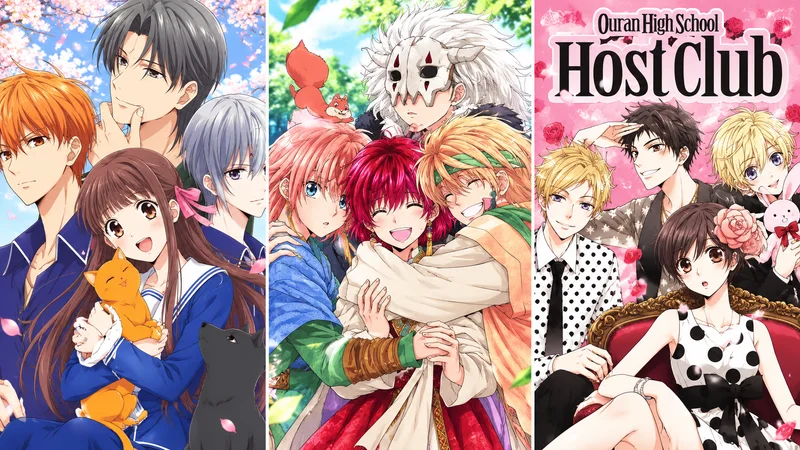
What is shoujo manga? Shoujo manga is Japanese comics traditionally published for girls and younger female readers. The Japanese word shōjo (少女) means “girl,” but the label identifies a target readership rather than a fixed genre. Readers exploring Japanese comics on MangaNato may encounter shoujo stories about first love, political conflict, magical powers, friendship, or a character finding her place in the world.
Romance is closely associated with shoujo, yet it does not define every series. Likewise, large expressive eyes, flower-filled backgrounds, and emotionally charged scenes are recognizable artistic conventions, not requirements. The original Japanese magazine or publishing imprint often offers a more reliable clue to a work’s classification than its artwork or plot alone.
The distinction matters when comparing shoujo with josei, shonen, and familiar genres such as fantasy or comedy. Looking at the history of girls’ manga, the way its pages tell stories, and a few contrasting titles makes the term easier to understand without assuming every reader wants the same kind of story.
The Meaning of Shoujo and Its Publishing Roots
The spellings shoujo, shojo, and shōjo refer to the same Japanese term. The macron in shōjo marks a long vowel; shoujo is another way to represent that sound in romanized Japanese. English publishers commonly use shojo, as seen in VIZ Media’s Shojo Beat imprint. A change in spelling does not mean a different category.
To answer “What is shoujo manga?” in a historical sense, it helps to look at the magazines that served girls in Japan. Publications for young female readers existed before today’s manga market took shape. As illustrated storytelling became a larger part of these magazines after World War II, girls’ comics developed their own publishing spaces and devoted readerships.
Women creators became increasingly influential, especially during the 1960s and 1970s. Artists experimented with page composition and explored science fiction, psychology, identity, and different kinds of relationships. That development broadened what a story aimed at girls could be. Shoujo’s publishing history is therefore richer than the idea that it has always been a collection of light romantic comedies.
A Readership Category, Not a Single Genre
When someone asks “What is shoujo manga?”, they may really be asking what kind of story to expect. The answer is that readership and genre describe different things. Shoujo indicates the audience a publication traditionally addresses; romance, adventure, horror, and comedy describe the type of story being told.
Several kinds of storytelling can belong to the shoujo tradition:
- Romance and school life: Relationships develop alongside friendships, uncertainty, growing confidence, or changing social circles.
- Fantasy and adventure: Characters face supernatural threats, political struggles, unfamiliar worlds, or responsibilities they never expected.
- Comedy: Contrasting personalities, mistaken impressions, and unusual situations drive the humor.
- Drama and personal growth: Stories examine grief, family expectations, ambition, identity, or the consequences of difficult choices.
- Mystery and suspense: Secrets and danger can provide the central conflict rather than a romantic rivalry.
These possibilities overlap. A fantasy series may also include romance, and a school comedy may have serious moments. A label based on readership does not tell you how intense, realistic, or suitable for a particular age a story will be. For those questions, its synopsis and the publisher’s content guidance are more useful.
Visual Storytelling Without a Fixed Art Style

Shoujo artwork is often associated with detailed eyes, delicate linework, expressive close-ups, and backgrounds that reflect a character’s feelings. Artists may use flowers, light, or open space to emphasize a mood. Panels can become less rigid during an emotional scene, drawing attention to what a character is experiencing rather than simply showing physical action.
But these techniques are not exclusive to shoujo, and not every shoujo artist uses them. Some works favor crisp action sequences; others use understated expressions or comedic exaggeration. The page layout changes to serve the story. It would be misleading to identify a manga’s intended audience solely by whether its characters have large eyes.
For readers asking “What is shoujo manga?” from a visual perspective, the more useful observation is how character experience can shape the presentation. A pause before an important conversation, a crowded page during confusion, or a quiet sequence with minimal dialogue can give emotional weight to an event. Other manga categories can use exactly the same methods.
Shoujo, Josei and Shonen: What Actually Changes?
What is shoujo manga compared with josei or shonen? The central difference is the traditional intended readership of the original publication, not a rule about what characters are allowed to do. These categories are widely used to discuss Japanese comics, even though audiences overlap in practice.
- Shoujo: Traditionally marketed toward girls and younger female readers; its subjects include romance, fantasy, action, and more.
- Josei: Traditionally marketed toward adult women; titles may explore work, relationships, everyday life, or imaginative settings.
- Shonen: Traditionally marketed toward boys and younger male readers; it includes comedy, romance, sports, action, and fantasy.
- Seinen: Traditionally marketed toward adult men; its stories can be gentle, humorous, suspenseful, or serious.
For example, Demon Slayer: Kimetsu no Yaiba was serialized in Weekly Shonen Jump, making it a familiar shonen title. Readers interested in how that classification connects to magazine publication can look at when the Demon Slayer manga first came out. Its publication history is different from that of a title that began in a girls’ manga magazine, even though both may feature emotional relationships and dramatic action.
Josei and shoujo can be particularly easy to confuse because some stories attract readers across both groups. A manga about adults is not automatically josei, and a manga with a youthful protagonist is not automatically shoujo. Knowing the original magazine provides stronger evidence than making assumptions from a character’s age.
Four Manga That Show How Different Shoujo Can Be
The question “What is shoujo manga?” becomes more concrete when you compare actual works rather than relying on familiar stereotypes. These four titles come from recognized shoujo publishing traditions, yet their central conflicts differ substantially.
Kimi ni Todoke: From Me to You
Karuho Shiina’s Kimi ni Todoke follows Sawako Kuronuma, a shy student whose appearance makes her classmates misunderstand her. As she gets to know Shota Kazehaya, the story develops through friendship, trust, and the difficulty of expressing feelings. It illustrates how romantic storytelling can be closely tied to social growth rather than dramatic twists alone.
Yona of the Dawn
In Mizuho Kusanagi’s Yona of the Dawn, a princess loses the security of her royal life after a violent betrayal and must survive outside the palace with her protector Hak. The story combines political conflict, travel, danger, and relationships. It is a useful counterexample to the claim that shoujo manga must focus on school life or dating.
Pretty Guardian Sailor Moon
Naoko Takeuchi’s Sailor Moon follows Usagi Tsukino, who discovers her role as a magical guardian and joins other girls in confronting supernatural threats. Friendship, identity, responsibility, and romance all contribute to its appeal. Its magical-girl premise shows that action and fantasy have a long-established place in shoujo storytelling.
Ouran High School Host Club
Bisco Hatori’s Ouran High School Host Club follows Haruhi, a scholarship student who becomes involved with an extravagant club at an elite school after accidentally breaking an expensive vase. The story uses social differences, disguises, and the club members’ exaggerated personalities to create comedy alongside developing relationships.
These examples do not establish a single preferred tone. They show why browsing by story premise is more reliable than assuming all shoujo titles resemble one well-known romance.
When Shoujo Manga Becomes Anime
A shoujo manga can be adapted into an anime, but the terms describe different things. Manga is sequential artwork presented in print or digital form; anime is animation. A television series adapted from a shoujo title is often called shoujo anime because of the source material’s readership category.
Adaptations may shorten conversations, rearrange events, add movement and sound, or stop before the manga’s storyline is complete. Conversely, anime can be created without originating in a manga magazine at all. To answer “What is shoujo manga?” rather than simply identify shoujo-flavored animation, it helps to consider the original published work and its format.
English translations can also use different romanizations. Seeing shojo on a book cover and shoujo in an anime discussion does not mean that the two audiences or stories belong to separate traditions.
How to Pick a Shoujo Manga You’ll Enjoy
For someone searching “What is shoujo manga?” while deciding what to read, a more practical next step is to identify the kind of conflict they enjoy. The four titles above illustrate very different starting points, and a demographic label cannot substitute for personal taste.
Before choosing a series, consider the following:
- Start with the premise: Choose a story about relationships, adventure, humor, or another subject that genuinely interests you.
- Check the publishing background: The original Japanese magazine or a publisher’s imprint can clarify a title’s audience category.
- Look at the tone: A cheerful school comedy may feel very different from a fantasy involving betrayal or a drama about isolation.
- Confirm the edition: A manga, an anime adaptation, and a revised collected edition may present material differently.
- Read age guidance: A shoujo label is not an age rating and does not guarantee that every scene is suitable for every reader.
If you are new to Japanese comics, sample pages also help you become comfortable with the usual right-to-left page order. That reading convention is common to printed manga across demographic categories; it is not something unique to shoujo.
Frequently Asked Questions
Can Boys and Adult Readers Enjoy Shoujo Manga?
Yes. The category indicates an intended market, not a restriction on who can enjoy the stories. Readers of any age or gender may appreciate shoujo romances, adventures, comedies, and dramas.
Is Every Manga with a Female Protagonist Shoujo?
No. Female leads appear in shonen, seinen, josei, and other comics as well. A protagonist’s gender does not determine which readership the original publication targeted.
Does Shoujo Manga Have a Different Reading Direction?
Not generally. Japanese print shoujo manga usually follows the right-to-left page order familiar from other Japanese manga. Translated or reformatted editions can vary, so follow the instructions for the version you are reading.
Final Thoughts
Ultimately, what is shoujo manga? It is Japanese comics traditionally aimed at girls and younger female readers, shaped by a long publishing history and a wide variety of storytelling approaches. Romance may be prominent, but fantasy, action, comedy, and serious drama also belong in the picture.
Understanding shoujo as a readership category rather than a strict genre makes it easier to explore without stereotypes. Choose a series for its characters and premise, use publishing information to understand its classification, and let the story itself determine whether it is right for you.

Adam Kan is a content editor at MangaNato with a passion for manga, manhwa, and manhua. He focuses on exploring popular series, highlighting fresh releases, and creating engaging content that helps readers discover compelling stories across different genres.