
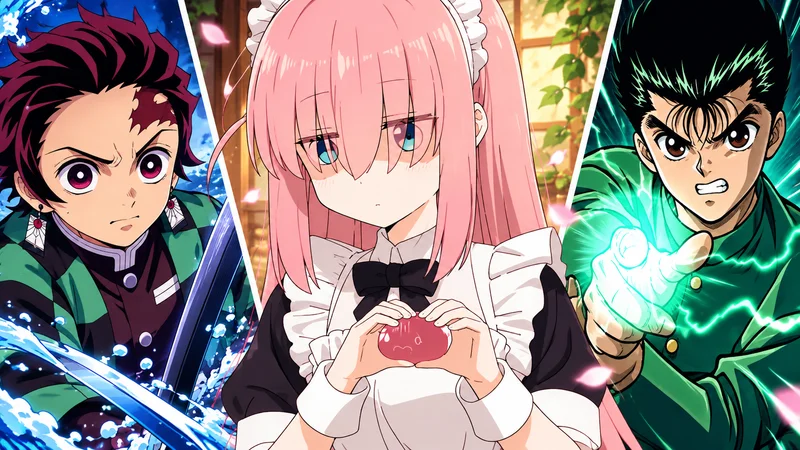
Are all animes based on manga? No. Many Japanese animated series adapt manga, but others begin as original animation or draw their stories from novels, light novels, video games, and other works. Anime describes an animated medium, not a requirement that a comic must exist first. Readers exploring Japanese storytelling on MangaNato can find familiar titles with surprisingly different beginnings.
Demon Slayer was adapted from a manga, while Pokémon grew from a video game franchise. Violet Evergarden draws on a novel, and Spirited Away was created as an original animated film. These differences matter because a related manga does not always tell you which version came first or who developed the original story.
The question “are all animes based on manga” also raises another useful point: a manga adaptation and an anime-original production can both have comics, novels, and games connected to them. Understanding the order of creation, rather than simply noticing that multiple versions exist, is the clearest way to identify an anime’s source.
Anime Is a Medium, Not a Type of Manga Adaptation
Anime is the usual English term for animation associated with Japan, including television series, theatrical films, and other animated productions. Manga is comics: pictures arranged in a sequence, usually with dialogue and narration presented on pages or digital screens. The two forms often influence each other, but one is not a necessary starting point for the other.
The question “are all animes based on manga” mixes up those formats. A studio can animate an existing comic, develop a screenplay directly for the screen, or adapt a story that was originally told through prose or interactive play. What makes the finished work anime is its animation, not the format of its source material.
This is why genre labels do not establish a work’s origin either. A fantasy anime might adapt a manga or a light novel, while a science-fiction anime might be created from an original screenplay. Identifying the underlying work requires looking at the production history.
Where Anime Stories Come From
When readers ask “are all animes based on manga,” they often know about comic-to-screen adaptations but not the other paths a project can take. The most common starting points worth distinguishing are:
- Manga: An existing comic supplies characters, events, and artwork that an animation team adapts for moving images.
- Light novels and other books: A prose story becomes animation, with text descriptions and inner thoughts reworked into scenes and performances.
- Video games: A series or film draws from a game’s setting, characters, and ideas, sometimes inventing a new plot rather than repeating the player’s journey.
- Original screen stories: Creators develop a story primarily for animation instead of adapting a previously published narrative.
- Other creative works: Visual novels, stage productions, and further storytelling formats can also provide source material.
These are categories of origin, not measures of quality. An anime adapted from a short book can feel as expansive as an original television series, and a comic adaptation can make major creative choices while remaining recognizable to readers of the manga.
Original Anime Does Not Need a Manga First
A decisive answer to “are all animes based on manga” comes from productions developed as animation from the outset. Their core story is not a retelling of a pre-existing comic, even if publishers later release related manga or novels.
Spirited Away: An Original Animated Film
Studio Ghibli’s Spirited Away (2001) was written and directed by Hayao Miyazaki as an animated film. It follows Chihiro, a young girl who enters a spirit world and must find a way to rescue her parents. The film’s original story was developed for cinema rather than adapted from an earlier manga series.
Lycoris Recoil: An Anime-First Television Story
Lycoris Recoil (2022) is an original television anime produced by A-1 Pictures. Its story centers on Chisato and Takina, who work at a café while becoming involved in dangerous assignments. Manga and other companion works followed, but they do not turn the television anime into a manga adaptation.
The order of publication can sometimes be tricky. A manga connected to an anime project may appear before the first episode airs because both are being developed around the same production. The earlier publication date alone does not prove that the animation was adapted from that manga; the original creation credits and production background are more useful.
When Manga Is the Source for an Anime
Manga adaptations remain an important part of the anime industry. A manga-based production takes an existing comic and transforms its still panels into motion, dialogue performances, music, and edited scenes. If the distinction between pages and animation is unfamiliar, the MangaNato guide What Is Manga explains how Japanese comics are read and published.
Demon Slayer: Kimetsu no Yaiba is a clear example. Koyoharu Gotouge’s manga began serialization in 2016, and its television anime adaptation premiered in 2019. The animated series follows Tanjiro Kamado’s struggle against demons, adapting the central characters and story from the comic while adding movement, sound, and visual effects.
Even a faithful adaptation is not simply a manga page played back on a screen. An animation team must decide how long a moment lasts, how a character sounds, how scenes connect, and which visual details need emphasis. Some anime also rearrange events, expand short scenes, or introduce material not present in the original chapters.
Books and Games Can Be the Starting Point Too

For anyone still asking “are all animes based on manga,” adaptations from other media offer especially useful comparisons. A work can have a manga edition without that edition being the source of its anime.
Violet Evergarden: From Novel to Animation
Violet Evergarden was adapted from Kana Akatsuki’s novel, published under Kyoto Animation’s KA Esuma Bunko imprint. The story follows a former soldier who takes a job writing letters for others while trying to understand emotions and the meaning of words spoken to her. Kyoto Animation reshaped the prose narrative for television rather than adapting a manga as its primary source.
Pokémon: From Games to Television
The Pokémon franchise began with video games released in Japan in 1996. Its television anime followed in 1997, telling adventures set in the same world while developing its own characters and situations. The franchise also has manga, but the existence of those comics does not mean the animated series originated as a manga adaptation.
The difference between the original game and the television story also shows why an adaptation does not have to reproduce its source step by step. Interactive choices and gameplay mechanics often become a more continuous narrative when adapted for an audience watching rather than playing.
How to Check What an Anime Is Based On
The simplest way to settle “are all animes based on manga” for a particular title is to identify the work credited as its source. An official anime website, publisher page, or production announcement is usually a stronger starting point than an unsourced genre tag or a list of related books.
- Look for original-work credits: Production pages may identify a manga creator, novel author, game franchise, or an original animation project.
- Compare the first releases: Check when the source story appeared and when the anime entered production or premiered.
- Identify the format: A light novel, web novel, visual novel, game, and manga are different starting points, even when they share characters.
- Watch for companion editions: A manga issued alongside or after an original anime may be an adaptation of the animation rather than its source.
- Check the exact installment: A television series, film, reboot, or spin-off may have different origins within the same franchise.
One date is rarely the entire story. The source material for a major project can be developed while several adaptations are planned at once, so production credits help explain the creative direction more clearly than release order by itself.
Why an Anime Might Differ from Its Source
Knowing where an anime began also helps set expectations when you compare versions. A source adaptation and an original animation face different storytelling choices, but both may produce later spin-offs and alternate retellings.
- Pacing: A single manga chapter may take part of an episode or several episodes, depending on how the animation is structured.
- Point of view: A novel’s internal narration may be replaced by dialogue, gestures, or a scene that shows the character’s feelings.
- Story structure: Games with branching choices may require a television adaptation to select or create a continuous route.
- Added material: Anime can include new scenes or episodes, but added material does not automatically change the origin of the overall series.
It is useful to distinguish an anime-original work from anime-original material inside an adaptation. The first term describes a project developed as animation; the second can describe scenes or episodes created for a show that otherwise follows a manga or another source. They are not interchangeable.
Frequently Asked Questions
Can an anime have a manga that was published later?
Yes. An original anime can inspire a manga adaptation or spin-off after the animated story appears. The existence of a manga does not establish which version came first.
Is Pokémon based on a manga?
The Pokémon animated franchise grew from the video game series, not from a manga as its original foundation. Pokémon manga also exist and may tell different versions of stories set in that world.
Are anime-original episodes the same as an original anime?
No. An original anime is developed primarily for animation. Anime-original episodes are newly created material within a series that may otherwise adapt an existing manga, book, or game.
Is “animes” the correct plural of anime?
In standard English, anime is commonly used for both singular and plural references. People also write animes informally online. The wording does not change the answer to “are all animes based on manga”: animation can begin from several different sources.
Final Thoughts
So, are all animes based on manga? No. Manga is one major source, but some anime begin as original productions and others adapt novels, games, or different kinds of stories. Demon Slayer, Spirited Away, Violet Evergarden, and Pokémon illustrate these distinct paths.
If you want to know where a particular anime came from, look for its original-work credits before assuming that a related manga was published first. That small distinction makes comparisons between comics, animation, and other adaptations much more accurate.

Adam Kan is a content editor at MangaNato with a passion for manga, manhwa, and manhua. He focuses on exploring popular series, highlighting fresh releases, and creating engaging content that helps readers discover compelling stories across different genres.